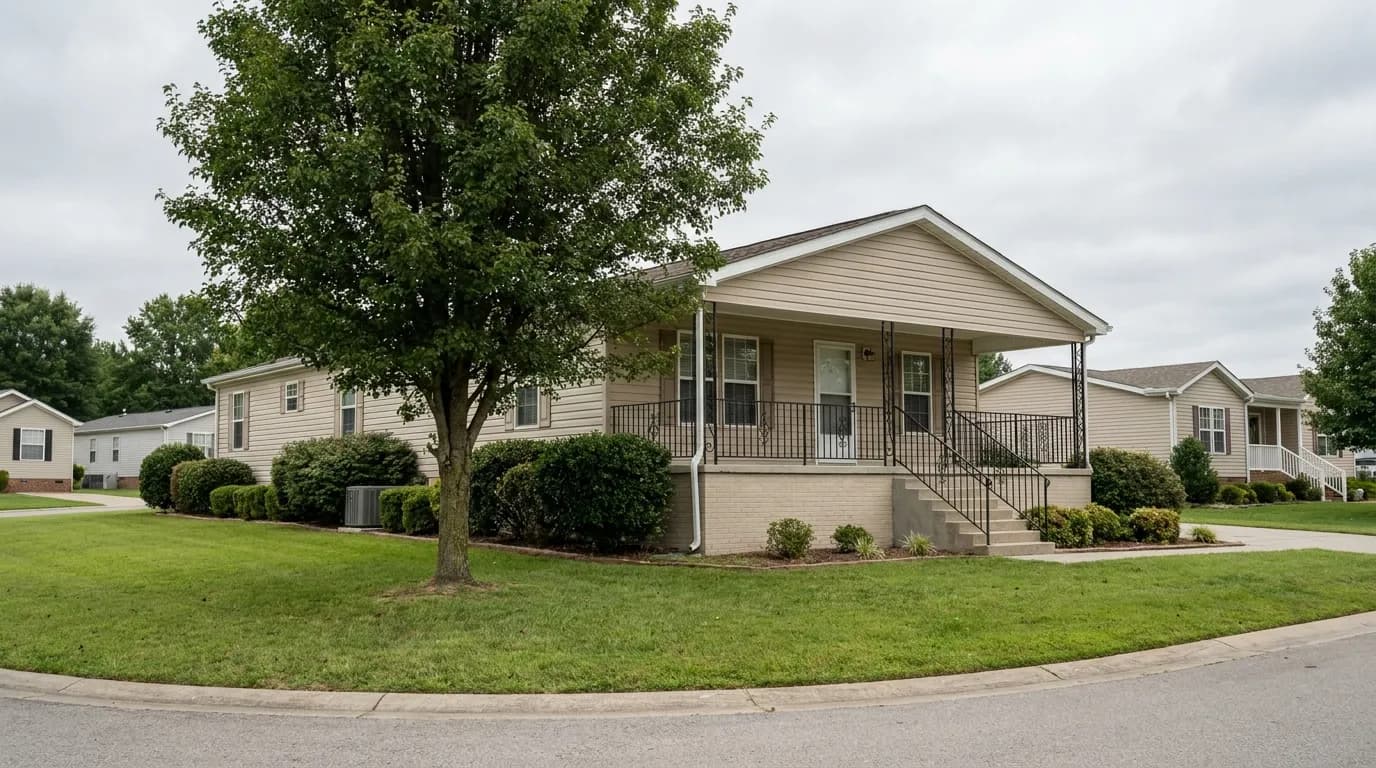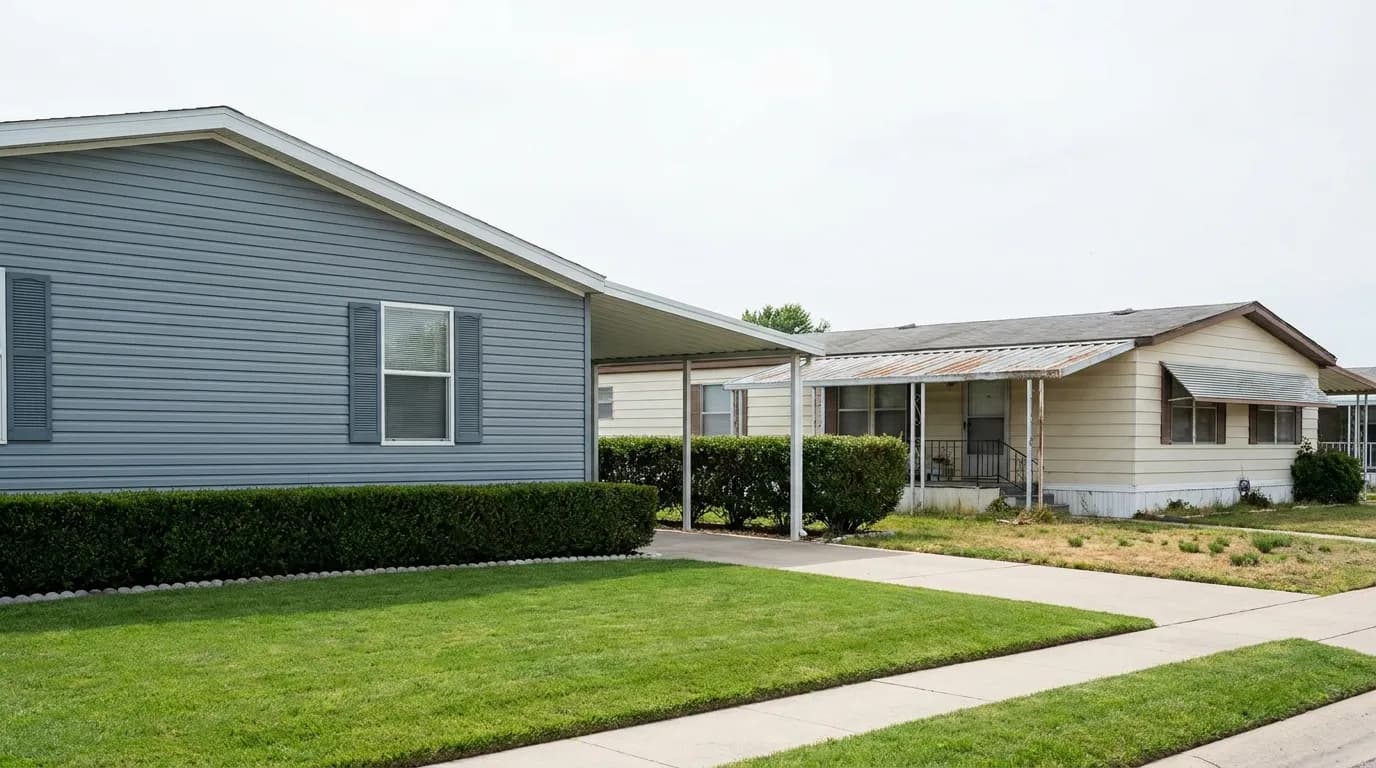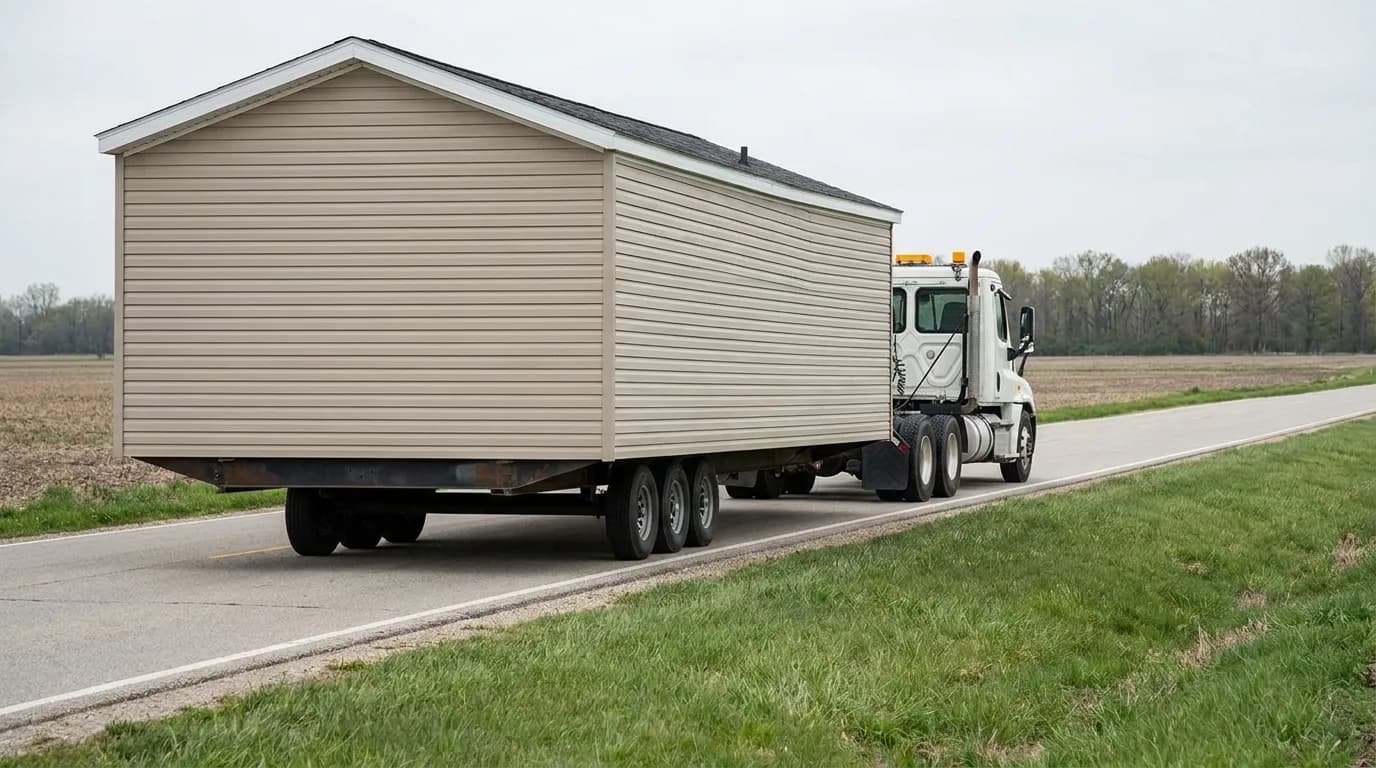
Manufactured homes are called mobile homes, which gives people a reasonable but often wrong impression. Most are moved exactly once, from the factory to the lot, and never again.
That is not because moving them is impossible. It is because moving one carries a long cost list, several hard gates that can end the discussion before cost is even relevant, and a result at the other end that is frequently worth less than the move cost.
Here is how to work out whether yours is the exception.
The question, framed correctly
Not "what does it cost to move a mobile home." The question is:
What is the home worth, set up and habitable, at the destination, compared to what it is worth where it sits now, plus the all-in cost of getting it there?
If value at the destination does not exceed value here plus total move cost, the move does not pencil, and you are better off selling in place and buying at the destination.
That framing matters because people reason about the transport quote in isolation. The transport quote is typically a minority of the real total.
The gates, which come before the math
Check these first. Any one of them can end it.
1. Age. Many communities will not accept a home over a certain age, and many local jurisdictions have their own age limits for placing a home on private land. Homes built before 15 June 1976, when the federal HUD Code took effect, carry no HUD certification label and are frequently refused outright by communities, lenders, and insurers. If the destination will not accept the home, the cost question never arises.
2. Wind zone and thermal zone. The data plate, usually inside a kitchen cabinet or near the electrical panel, states the wind and thermal zones the home was built for. A home built to a lower wind zone standard generally cannot be legally sited in a higher wind zone area. People discover this late and it is a genuine hard stop. Photograph the data plate before you plan anything.
3. Structural fitness for transport. A transporter will assess the frame, floor system, and roof. Homes with frame rust, soft floors, or water damage may not survive the road, and reputable transporters decline them rather than risk a failure at highway speed. That refusal is information, not an obstacle to shop around.
4. Conversion to real property. If the home was legally converted and attached to the land, it is part of the real estate in most states and cannot simply be titled and hauled away. It has to be de-converted first, and not every state has a clear process for that. See chattel or real property.
5. Liens. An unreleased lien on the title blocks a transfer and complicates a relocation.
6. Your current community's rules and your account. Many leases govern removal, require notice, and require the account to be clear. See back lot rent.
7. Somewhere to put it. Vacant lots in decent communities are scarce in many markets, and communities with vacancies frequently impose their own home age and condition requirements, or want you to buy their home rather than bring yours. If you are moving to private land, confirm zoning, setbacks, and utilities first.
The real cost list
When you do get to the math, these are the categories. We are deliberately not attaching dollar figures, because they vary enormously by state, distance, home size, and year, and a made-up number would be worse than none. Get quotes.
Before the move
- Permits, required at state level and sometimes by each county or municipality on the route.
- A route survey for width and height clearance, and escort or pilot vehicles where required.
- Removing skirting, steps, decks, porches, carports, and awnings. Site-built additions generally cannot travel and are frequently demolished.
- Disconnecting utilities, HVAC, and underfloor ductwork, plus provider disconnection fees.
- Axles, tires, and hitches. Homes sited for decades often no longer have them, and they must be sourced or rented.
- A transporter's pre-move inspection.
The move itself
- Transport per section. A doublewide is two moves, a triple is three.
- Distance, which drives fuel, hours, and often overnight staging.
- Insurance for the move, and confirmation of what the transporter's own coverage actually covers.
At the destination
- Site preparation and grading, the pad, piers or foundation, and anchors or tie-downs.
- Setting the home, joining the sections at the marriage line, and sealing that roof seam.
- Leveling, and a follow-up re-level after settling.
- Utility connections: electrical service, water and sewer taps or a well and septic system, gas, and the associated tap or impact fees.
- Skirting, steps, and handrails, usually required for occupancy.
- Permits, inspections, and an installer licensed for that jurisdiction.
After
- Cosmetic repair of travel damage. Drywall cracks, separated trim, misaligned doors and cabinets, and marriage-line issues are close to universal on older homes.
- Downtime and temporary housing, plus storage for contents.
A note on installation rules
HUD publishes Model Manufactured Home Installation Standards at 24 CFR Part 3285, with the associated installation program at Part 3286. Read them, with one important qualification: those model standards address the initial installation of new manufactured homes.
Setting a used home at a new site is generally governed by state and local installation requirements and your state's installer licensing regime, which HUD administers in states not approved to run their own program. So the practical step is to ask your destination state's manufactured housing office who is licensed to set a home there and what inspection is required.
Why it so often does not pencil
Two forces work against you on an older home.
The home does not gain value by arriving. A 1995 singlewide is a 1995 singlewide in both places. Unless the destination is a materially better market, or you are moving from a high lot rent community onto land you own, the value at the other end is similar to the value here.
The cost list does not scale down with the home's value. Permits, escorts, setting, anchoring, utility taps, and installer labor cost roughly what they cost whether the home is worth a little or a lot. On a low-value home those fixed costs can exceed the asset entirely.
So the common outcome, and we would rather say it than not, is that for many older homes the total of transport, setup, and repair exceeds the home's value at the destination. When that is true, the rational move is to sell where it stands and buy at the destination.
When moving genuinely does make sense
There is a real set of cases, and they share features.
- The home is newer and structurally sound.
- The distance is short, which cuts transport, permits, and escort costs substantially.
- You already own the destination land and utilities are at the site.
- You are leaving a community where lot rent is high or rising, so the move eliminates a recurring cost rather than relocating it.
- The destination accepts the home's age and the wind zone matches.
- You can do some peripheral work yourself, particularly skirting, steps, and decks.
The combination that most often works is a newer home moving a short distance onto family land with existing utilities, permanently replacing a lot rent payment.
Testing it in a week
Get two written transport quotes that explicitly include permits, escorts, and disconnect work, and that state what is excluded.
Get a setup quote from a licensed installer at the destination, including pad, piers, anchors, marriage line, and utility connections. This is the number people skip and it is frequently the larger one.
Confirm acceptance in writing. Ask the destination community or local permitting office whether a home of that year and wind zone can be placed there, and get a name attached to the answer.
Get two offers on the home where it stands, and separately price a comparable home at the destination. How manufactured homes get valued covers doing that without reliable comps.
Then put the four numbers side by side. The decision usually becomes obvious, and it is often not the one people expected.
The third option people forget
You can sell the home in place to a buyer who intends to move it themselves. That transfers the entire cost and risk of relocation to someone who does it regularly, and you are out clean.
Whether that buyer exists depends on the home's age, condition, and zones, which is another reason to know those facts before you start.
*Transport permitting, installation standards, installer licensing, zoning, and the process for de-converting a home from real property vary substantially from state to state and often by locality. This article is general information and not legal or engineering advice. Confirm requirements with your state's manufactured housing agency and local permitting office.*
Sources: 24 CFR Part 3285, Model Manufactured Home Installation Standards; HUD Office of Manufactured Housing Programs; HUD Manufactured Housing Homeowner Resources