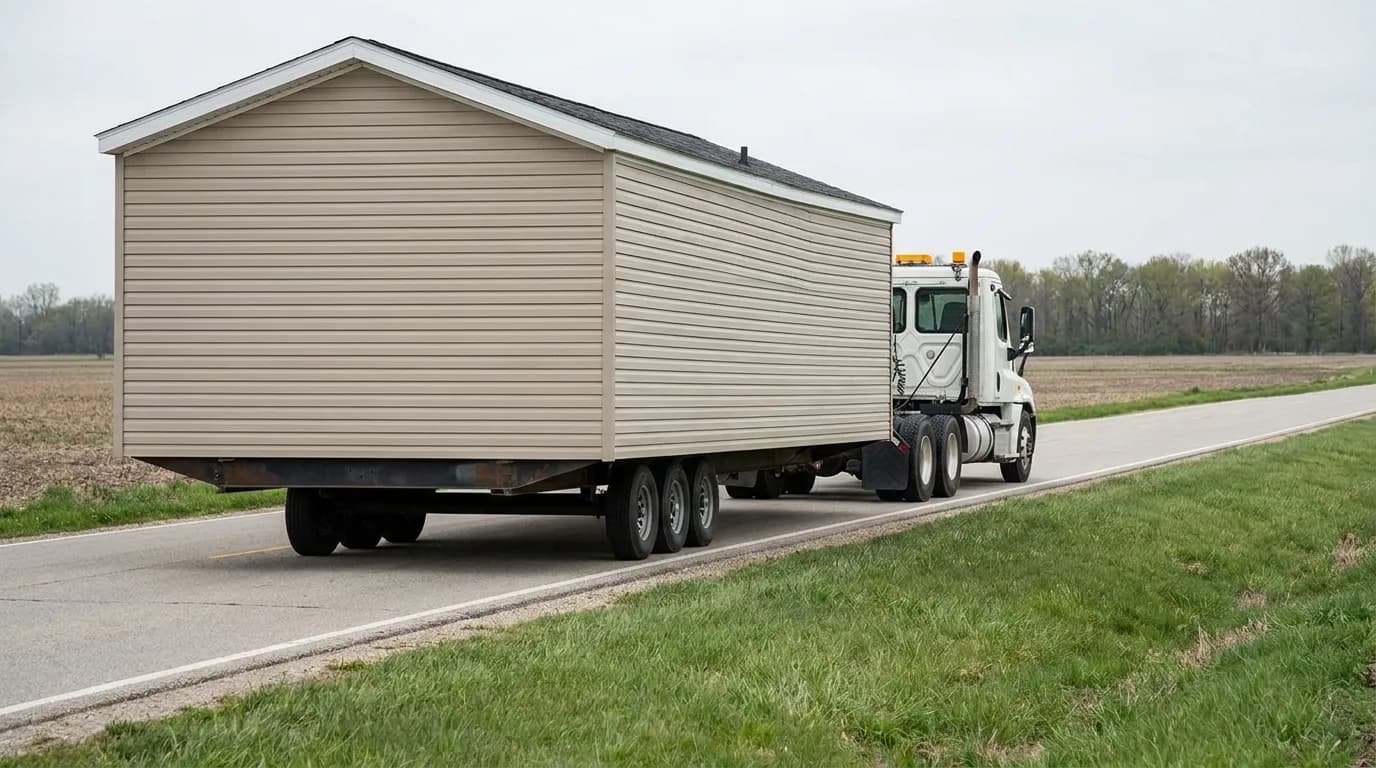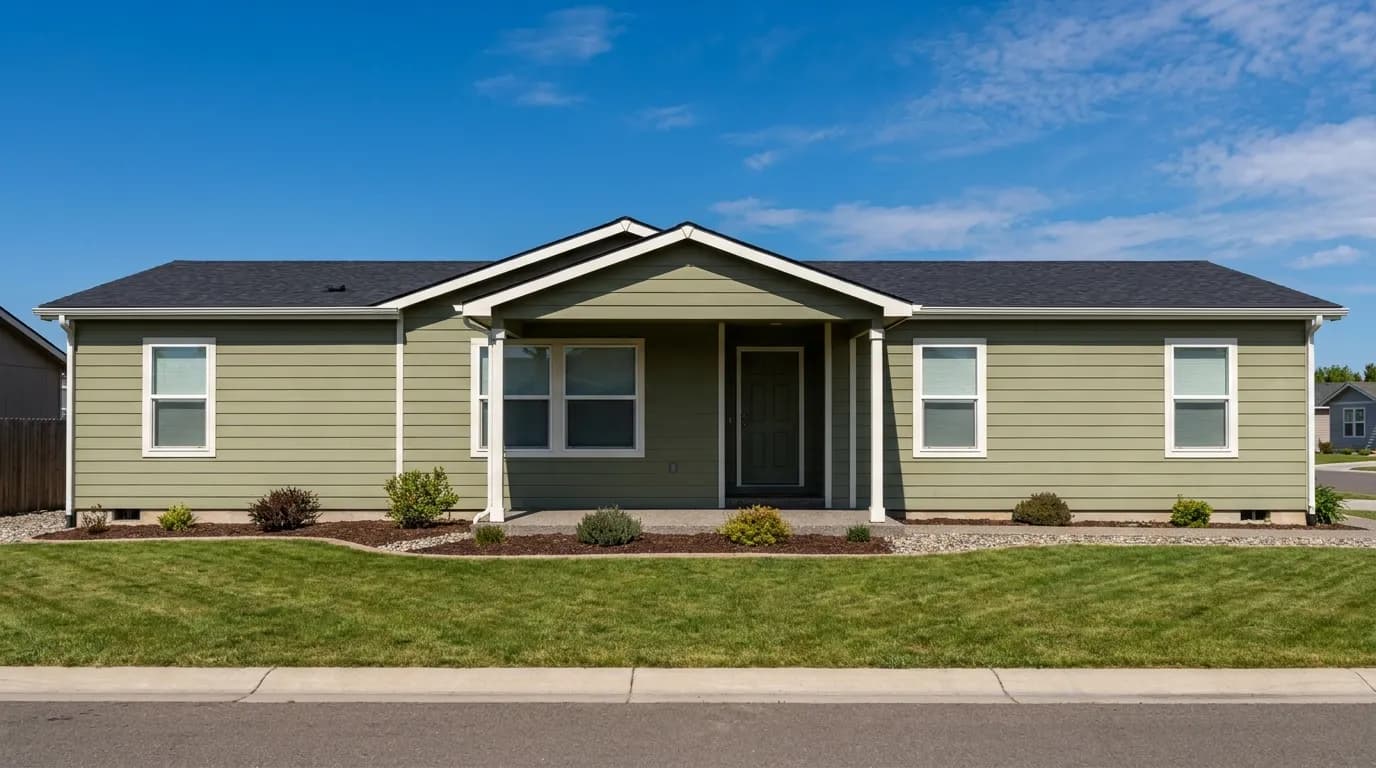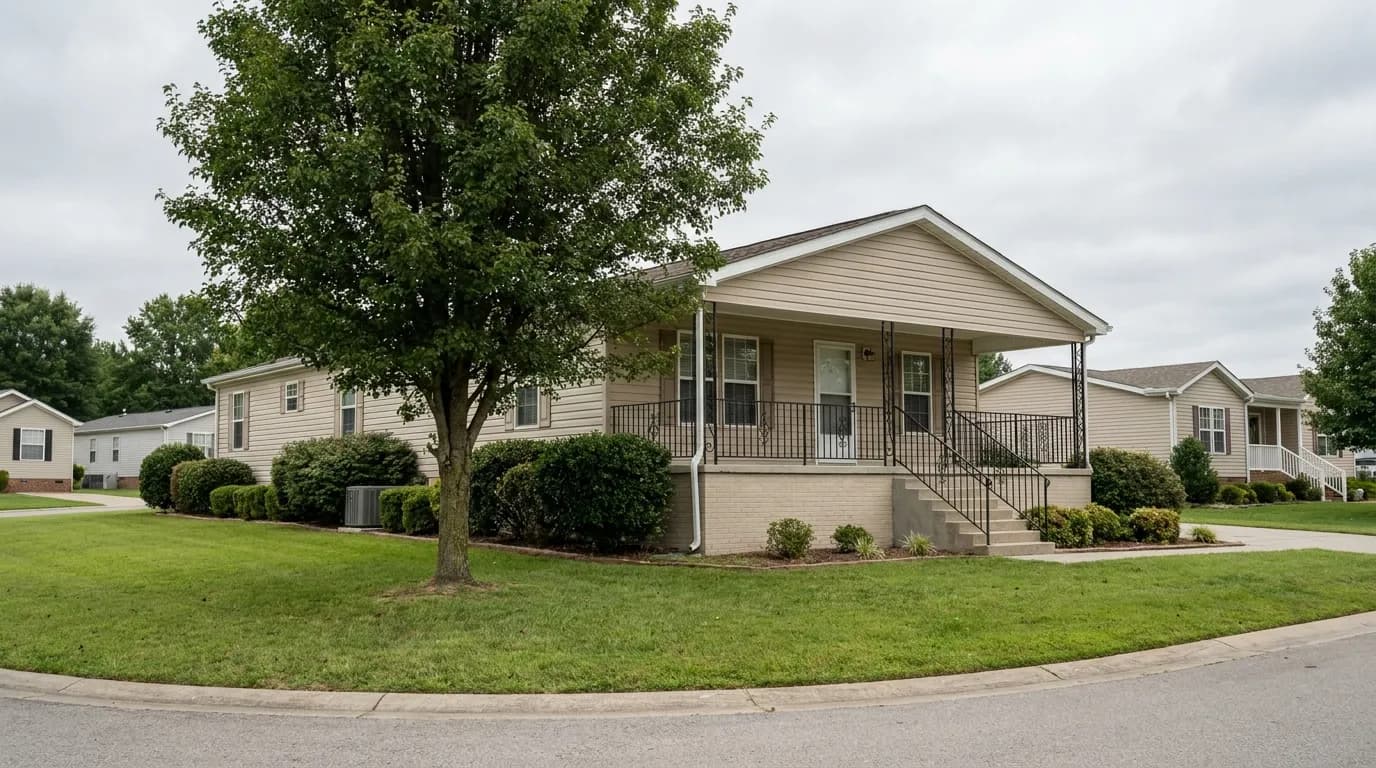
Nearly every manufactured home sale that goes sideways traces back to the same unanswered question, and most sellers have never been asked it: is the home chattel, or is it real property?
Chattel means personal property. The home has a title, much like a vehicle, with an owner of record held by a state agency. Real property means the home has been legally attached to the land and is now part of the real estate, conveyed by deed like a house.
The physical home can look identical either way. A 1998 doublewide on block piers with a brick skirt, a deck, a carport, and thirty years of landscaping can be either one. What decides it is paperwork, not concrete.
The default is chattel, and it stays chattel
A manufactured home leaves the factory with a Manufacturer's Certificate of Origin and gets titled as personal property. Unless someone took deliberate legal steps to change that, it is still personal property today.
This is the part that surprises people most. Time does not convert a home. Neither does a permanent foundation, removing the axles and hitch, pouring a slab, building an addition, or paying property taxes for twenty years. A home is not real property because it looks permanent. It is real property because a specific filing was made and a specific title was cancelled.
What varies by state, and it varies a great deal
There is no national manufactured home title. Every state runs its own system, and the differences are not cosmetic.
Who holds the title. In many states the motor vehicle agency titles manufactured homes. In others it is a dedicated manufactured housing division, a department of housing, a department of revenue, or a county-level office. In at least one large state the ownership record is not called a title at all.
What the conversion is called. Affixation. Surrender of title. Retirement of title. Cancellation. Elimination. Conversion to real property. Declaration of permanent location. The words differ and the forms differ.
What it takes. Some states require a recorded affidavit in the land records. Some require an application to the titling agency and an approval. Some require a certificate from the county assessor. Some require the land and home to be in identical ownership. Some allow a long-term recorded ground lease to count, and most do not.
Whether you can go back. Some states have a documented process to de-convert a home so it can be titled and moved again. Some have no clear process at all.
So the correct national statement is not "here is how conversion works." It is: conversion exists nearly everywhere, the mechanics are genuinely different everywhere, and you have to find your own state's version.
What is consistent everywhere, and worth knowing
Underneath the state variation, four things hold up almost universally.
It is a two-sided operation. The personal property title has to die and something has to be recorded on the land side. A conversion that only did one half is a common and expensive mess. You can find homes where the title was surrendered years ago but nothing was ever recorded against the parcel, so the home is neither clearly chattel nor clearly real estate, and no closing attorney will touch it until it is resolved.
An unreleased lien blocks it. Titling agencies generally will not cancel a title that still shows a recorded security interest. The loan being paid off is not the same as the lien being released. The most common version of this is a loan satisfied in the 1990s or 2000s by a lender that has since been acquired, renamed, or dissolved. Chasing a release from a successor institution can take weeks, and it is far easier to do when you are not under contract.
Land ownership generally matters. If the home sits on a rented lot in a community, conversion is usually not available to you at all. The home cannot become part of land you do not own.
It is close to permanent. Conversion ties the home to that parcel. If there is a realistic chance the home should be moved and sold separately from the land, conversion works against you. We go through that tradeoff in moving the home versus selling it in place.
Why it changes your sale so much
Your buyer pool. Chattel homes sell to cash buyers, to buyers using chattel loans, and to owner-finance buyers. Real property on owned land can sell to anyone who qualifies for a mortgage, which is a far larger group. That difference usually moves price more than any repair you could make.
The cost of the money your buyer uses. The Consumer Financial Protection Bureau's analysis of Home Mortgage Disclosure Act data found that roughly 42 percent of manufactured home purchase loans are chattel loans, secured by the home but not the land, and that chattel loans generally carry higher interest rates and fewer consumer protections than mortgages. Because most buyers shop by monthly payment rather than by price, a higher rate over a shorter term means the same buyer can support a lower purchase price. Financing type quietly caps what your buyer can offer.
Who closes it and how. A chattel sale can close by signing a title over with a bill of sale, sometimes at a kitchen table. A real property sale closes like a house, with a title company or closing attorney, a title search, and a recorded deed. Those are completely different processes with different timelines and different costs.
Your taxes. Chattel homes are often assessed and billed as personal property, sometimes by a different office than the one billing the land. Converted homes are assessed as part of the real estate.
Three checks that tell you which one you have
You can usually settle this in an afternoon without paying anyone.
Read your most recent tax bills. If the home shows up as its own personal property line, separate from the land, it is very likely still chattel. If the only assessment covers land and improvements together with no separate entry for the home, it has likely been converted.
Search the county land records for your parcel. Most county recorder or clerk offices have searchable indexes. You are looking for a recorded affidavit of affixation, declaration of permanent location, or similarly named instrument indexed against your property.
Ask the titling agency directly. If an active title exists in your name, the home was never converted, or the conversion was started and abandoned.
How to find your state's titling authority
Start with your state's motor vehicle agency. If they do not title manufactured homes, they will tell you who does, because they field that call constantly. Search for your state name plus "manufactured home title transfer" and restrict yourself to results on a .gov domain, because the non-government results in this space are largely lead generation pages. HUD maintains a list of State Administrative Agencies that administer federal manufactured housing standards, and while an SAA is not necessarily the titling office, it is a reliable government starting point.
If your home sits in a community, the office manager sees title paperwork routinely and can usually tell you which agency issues it in your state.
What to do with the answer
If your home is chattel on a rented lot, conversion is off the table and your realistic paths are a cash sale or a buyer with chattel financing whom the community approves. That is not a bad position, it is just a defined one.
If your home is chattel on land you own, is post-1976, and is in reasonable condition, converting before you sell is often the single highest-return thing you can do, because it changes who is allowed to bid. It costs money and takes time, so weigh it against the likely difference in outcome rather than assuming.
If your home has already been converted, you are selling real estate, and a standard listing deserves serious consideration. We lay out that comparison honestly in cash offer, owner financing, or listing.
Whichever it is, sort it out before you accept an offer rather than after. Find the paperwork first, using what documents you need to sell a manufactured home.
*Manufactured housing titling and conversion law varies substantially from state to state, including the agency involved, the name of the process, and whether it can be reversed. This article is general information and not legal advice. Consult an attorney or your state's titling authority about your specific property.*
Sources: HUD Office of Manufactured Housing Programs; HUD Manufactured Housing Homeowner Resources; CFPB, Manufactured Housing Finance: New Insights from the Home Mortgage Disclosure Act