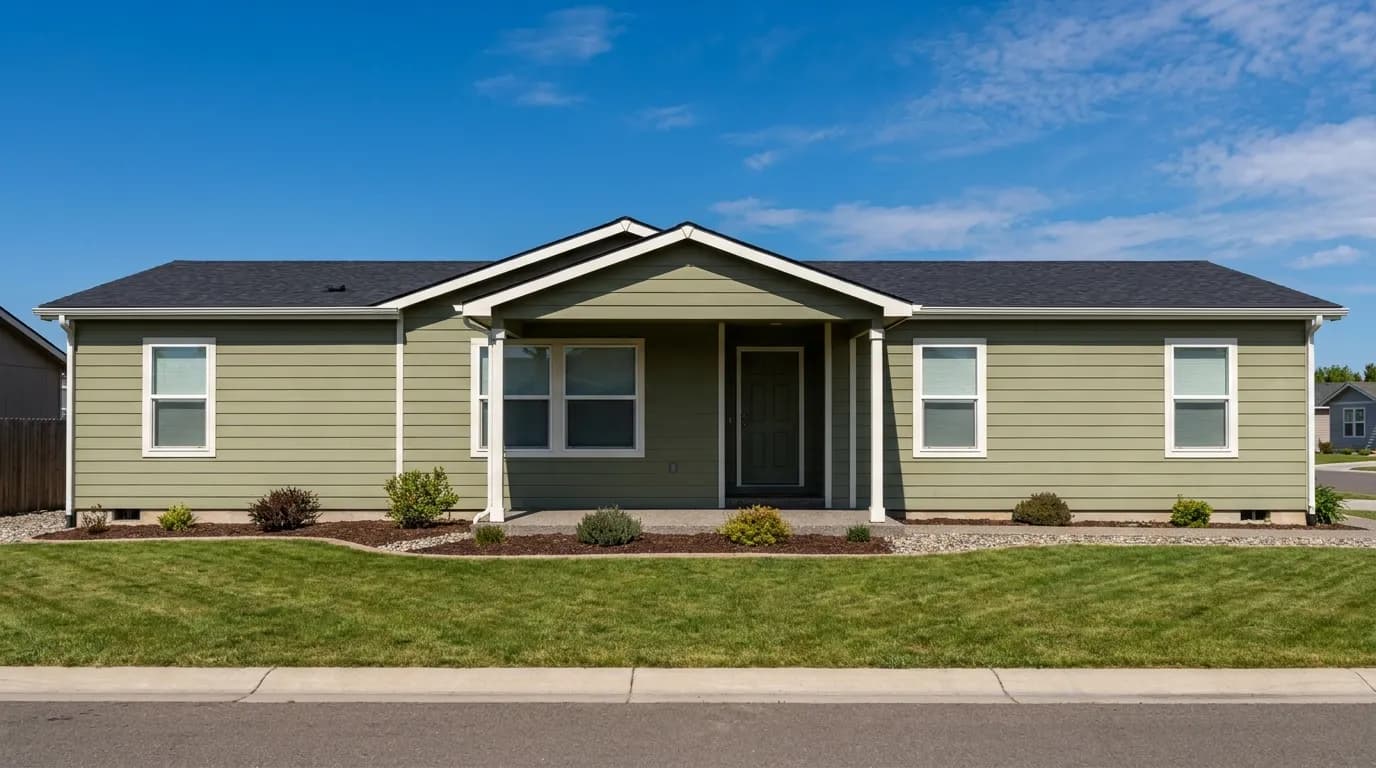
Ask what a house is worth and the method is obvious: find three similar houses nearby that sold recently, adjust for differences, done. That method is so standard that most people assume it works everywhere.
On manufactured homes it frequently does not work at all, and understanding why is the first step to getting a real number.
Why the comps are missing
Chattel transfers usually are not public records. When a titled manufactured home changes hands, ownership transfers through a state titling agency, much like a vehicle. There is no recorded deed. The county land records, which are where comparable sales data comes from for houses, contain nothing about it. The sale happened, and it is invisible to the usual sources.
MLS coverage is uneven. Some markets list manufactured homes on the MLS routinely. Some MLS systems restrict or exclude homes on rented lots. Plenty of these homes sell through the community office, a yard sign, or a Facebook group and never touch a listing service.
What you can see is asking prices, not sale prices. The listings you find online are what someone hopes to get. On manufactured homes the spread between asking and closing can be very wide, because the seller often has no reliable data either.
So the raw material that the comp method depends on either does not exist or is not representative. Anyone quoting you a confident comp-based value on a chattel home in a community should be asked where the data came from.
What about book value
There are published valuation guides for manufactured homes that estimate value from year, manufacturer, size, region, and features, working a bit like a vehicle valuation book. Lenders and insurers use them and they are a legitimate reference point.
What they cannot do is know your community. A guide can tell you what a 2003 doublewide of a given size is generally worth in a region. It cannot tell you that the community it sits in raised lot rent substantially last year, has an age cap coming, and that no chattel lender currently writes paper there. Those facts can matter more than every physical attribute of the home combined.
Treat book value as a sanity check on the home as an object, not as a price for the asset you are actually selling.
What actually drives the number
In rough order of impact.
1. The land situation. Owned land versus rented lot is the single largest fork in the road, and it is not a modest adjustment. A home on land you own that has been converted to real property can be financed with a mortgage, which multiplies the buyer pool. A home on a rented lot cannot. See chattel or real property.
2. The community itself, if it is on a rented lot. This is the factor sellers most consistently underweight. What matters: the lot rent amount, the direction lot rent has been moving, what the incoming rate will be for a new resident rather than your legacy rate, the rules, whether there is an age cap on homes, whether it is age-restricted for residents, the occupancy level, how the common areas are maintained, whether the owner is a long-time local or a large operator, and critically whether any lender writes loans on homes in that community.
3. Financeability. Built after 15 June 1976, so it carries a HUD certification label. Condition sufficient to pass a lender's standards. On a permanent foundation if a mortgage is contemplated. A lease with enough remaining term for the lender's requirement. If nobody will lend on it, your buyer pool is cash only, and cash buyers price differently.
4. Structure and systems. Roof condition and the marriage line seam on multi-section homes. Whether the home is still level and the piers and anchors are sound. Floor condition, which is where long-running leaks announce themselves. Water intrusion under the belly wrap. HVAC and underfloor ductwork. The electrical panel, since certain vintages are difficult to insure.
5. Size and configuration. Singlewide, doublewide, or multi-section. Square footage, bedroom and bathroom count.
6. The data plate. Wind zone and thermal zone are printed on the data plate inside the home. They determine where the home can legally be sited, which matters for resale and enormously for any possible relocation, and they influence insurance.
7. Local demand. Housing markets are local and manufactured housing demand is very local. A market with tight affordable inventory prices these homes differently than one without.
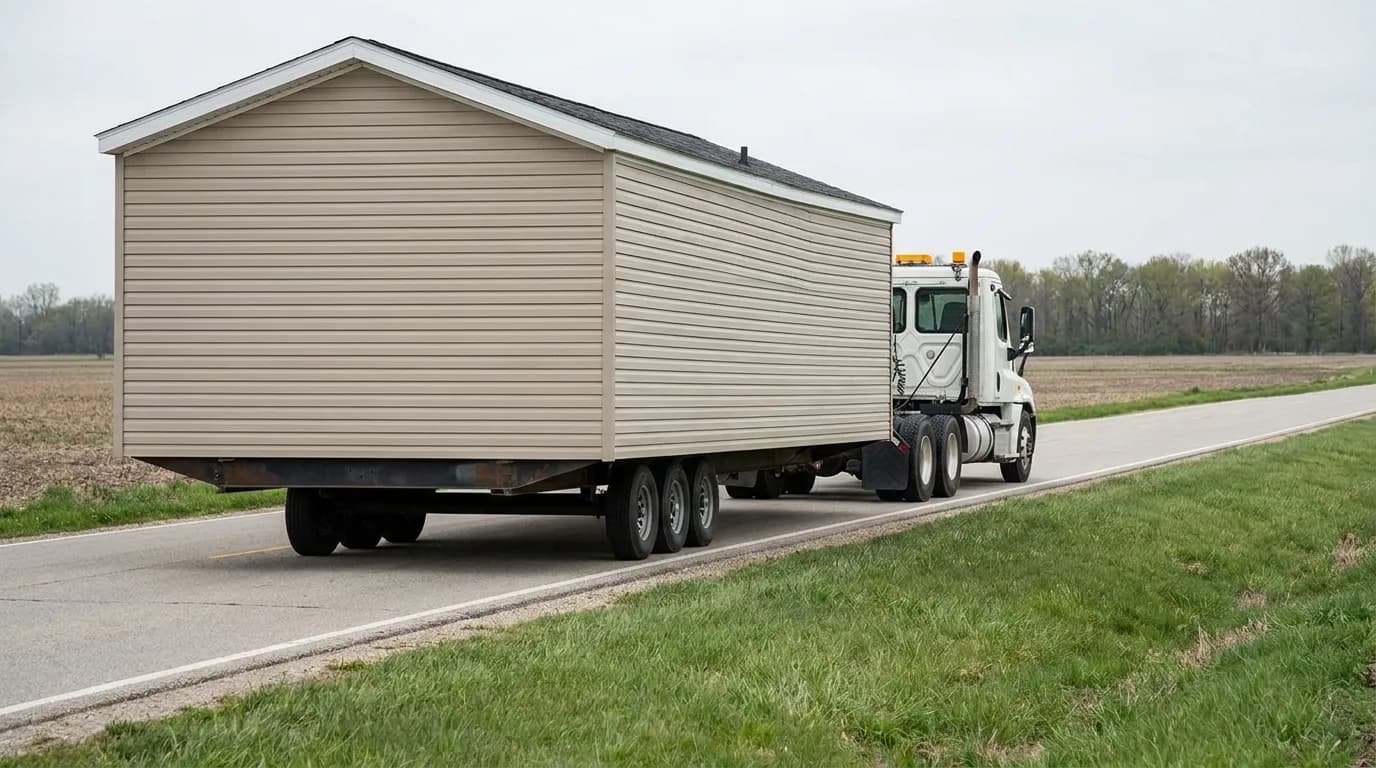
8. Moveability. Whether the home could physically and legally be moved, and whether anyone would want to. For older homes the answer is often no, which removes an entire category of buyer. See moving the home versus selling it in place.
Why two identical homes differ so much
Take two homes off the same production line, same year, same floorplan, same condition.
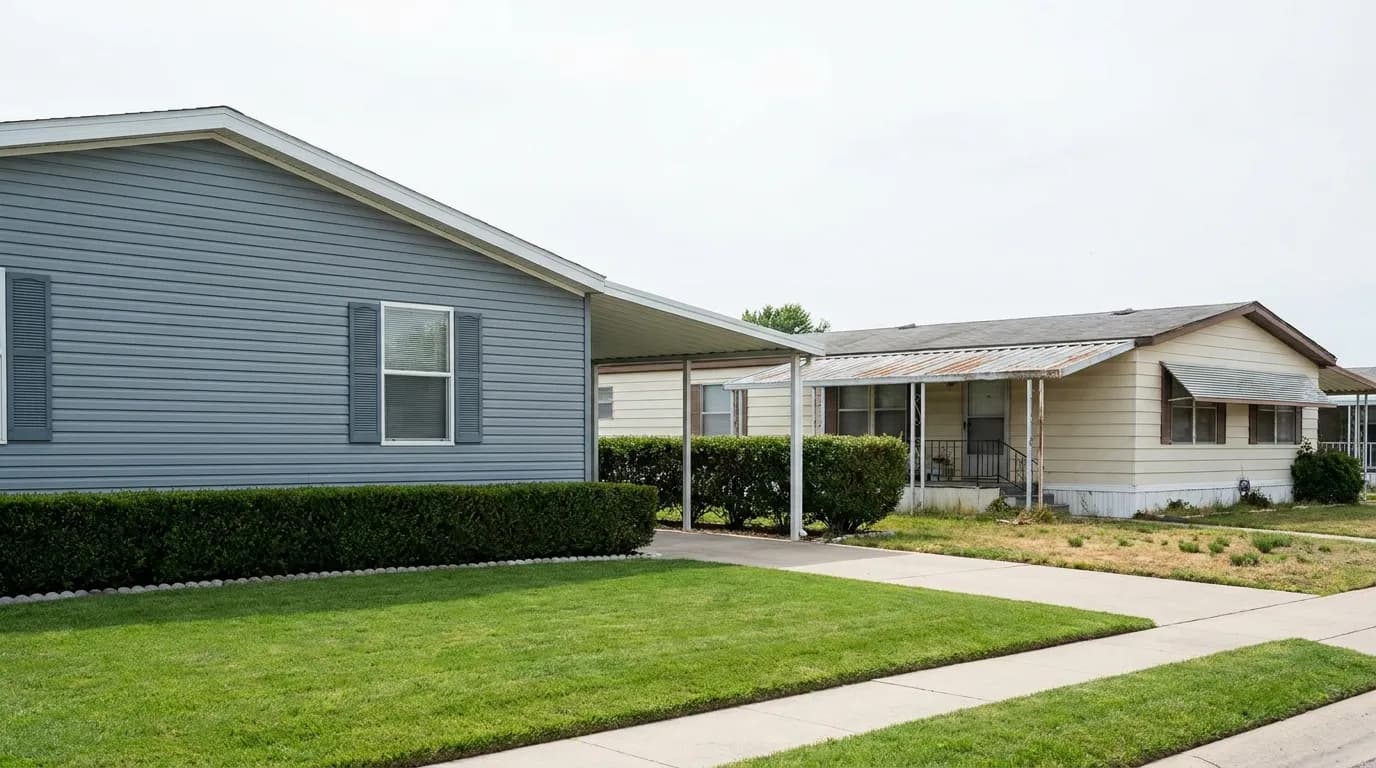
Home A sits in a community with moderate lot rent that has been stable, a resident-friendly set of rules, no age cap, and at least one chattel lender who actively writes loans there. A buyer can get financing. A buyer can be approved. A buyer can plan to still be there in fifteen years.
Home B sits in a community where lot rent has climbed steadily, there is an age cap that will make the home ineligible to remain in a few years, the rules require owner-occupancy, and no lender will finance a home on that lease. The only realistic buyer is someone paying cash who intends to occupy it and accepts that they may have to remove it later.
Same box. Completely different asset. In practice Home B often sells for a fraction of Home A, and no amount of new flooring closes that gap, because the gap is not about the home.
The mechanism is worth naming: a buyer who is payment-driven, which is most buyers, effectively capitalizes the lot rent. Higher lot rent consumes part of the monthly budget they had available, leaving less for the home itself. Lot rent is a tax on the home's value, and a rising lot rent is a declining value.
The reverse is also true on owned land. A converted home on a good parcel often derives most of its value from the land and the fact that the whole package is mortgageable, not from the home.
How to get a real read, yourself, in a week
Call the community office. Ask what homes in the community have sold for in the last twelve months, and ask what lot rent is for an incoming resident. Both answers are useful and the second one is often a surprise. Offices frequently know the sale prices because they processed the transfers.
Look at active listings in your community and in two comparable ones. You are looking at asking prices, so discount them, but the spread across communities is informative even when the absolute numbers are not.
Call a chattel lender who lends in your area and describe the home honestly. Ask whether they would lend on it, in that community, at that age and condition, and roughly what loan amount. Their answer defines the ceiling of what a financed buyer can pay.
Get two or three offers and pay attention to the spread. A tight cluster means the market is legible. A wide spread usually means one of those parties is missing information, and it is worth finding out which.
What a cash offer actually is
A cash offer is not a valuation. It is one buyer's number after subtracting what they expect to spend on condition work, community requirements, carrying cost while they hold it, transfer and title costs, and a margin for the risk they are absorbing, including the risk that the title or the community produces a surprise.
That is a legitimate number and sometimes it is the best available outcome. But it answers a different question than "what is this home worth." If you want both answers, get both, and compare them on net proceeds rather than on headline price. The framework is in cash offer, owner financing, or listing.
One thing worth doing regardless
Photograph the data plate and the HUD label, write down every serial number, and pull your community's current rules and incoming lot rent in writing. Those four items are what every serious buyer, lender, and insurer will ask for, and having them ready is the difference between an offer based on facts and an offer based on assumptions.
*Manufactured home valuation, titling, and community regulation vary substantially from state to state. This article is general information and not legal, tax, or appraisal advice. For a formal valuation, consult a licensed appraiser experienced with manufactured housing in your state.*
Sources: HUD Office of Manufactured Housing Programs; HUD Manufactured Housing Homeowner Resources; CFPB, Manufactured Housing Finance: New Insights from the Home Mortgage Disclosure Act