You fill out one form and your phone rings eleven times in two days. Different area codes, different company names, all asking the same three questions. That is not a coincidence and it is not bad luck. It is the business model.
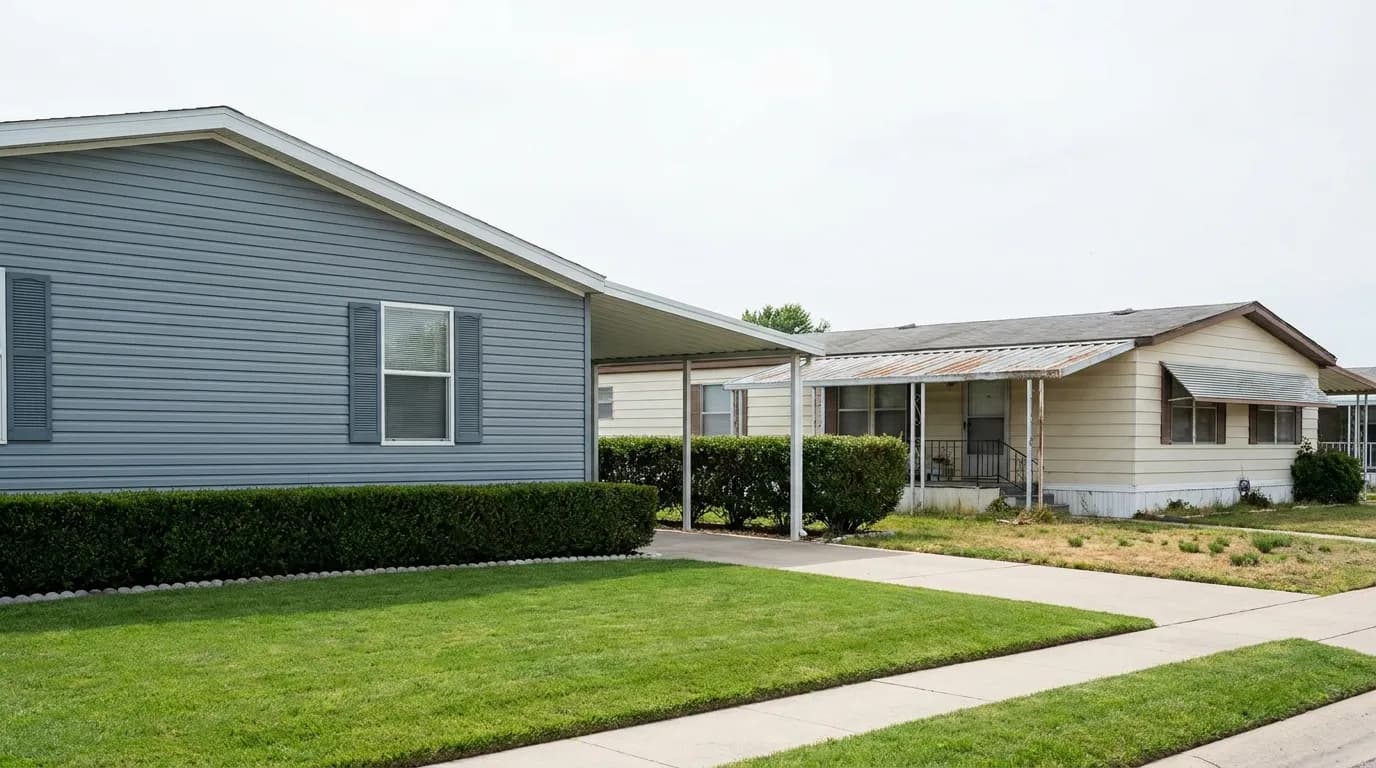
There are two kinds of websites in this industry that look almost exactly alike. One belongs to a company that buys manufactured homes and closes on them. The other belongs to a company whose actual product is your contact information. Both have a form, a stock photo of a tidy doublewide, and a headline about a fast cash offer.
Being honest about this: lead generation is legal, it is widespread in manufactured housing, and some of the operators who buy those leads are perfectly good buyers. The problem is not that lead resellers exist. The problem is that you cannot tell which kind of site you are on before you hand over your information, and after you hand it over you have no control over where it goes.
What actually happens to the form you filled out
The Federal Trade Commission has described how this works in detail. When you submit a form to a lead generation operation, your information is often routed through what the industry calls a ping tree, a sequenced sales process in which your data is offered to one potential buyer, then the next, then the next, within seconds. Leads that nobody in the tree buys are sometimes sold off separately as remnant leads, and the FTC has warned businesses that selling remnant leads can create liability when the buyer has no legitimate need for the information.
In one enforcement action the FTC described a company that ran dozens of loan application websites, collected sensitive consumer information, and sold the applications without meaningfully screening who was buying them. The settlement required the company to verify the identity of businesses receiving consumer information and to get express consent for those disclosures.
That is the mechanism behind eleven phone calls. Your information was not given to one buyer. It was sold to a sequence of them, and possibly resold after that.
The questions, and what the answers tell you
You do not need to be suspicious. You need to be specific. A real buyer answers these immediately because they are the details of their own business. A lead reseller deflects, generalizes, or promises to have someone call you back.
"Will the company on the purchase agreement be you?" A real buyer names the entity, or names the local operator and explains the relationship in one sentence. A lead reseller says something like "we work with a network of local investors" and then changes the subject. That answer is not disqualifying by itself, but it means you are talking to a middleman, and you should ask who the actual buyer is before you go further.
"Who is going to look at the home, and roughly when?" A buyer who operates in your area can answer with a person and a rough window. A reseller cannot schedule anything, because nobody works for them in your market.
"Is it in a community, and if so how do you handle park approval?" Anyone who has closed manufactured home deals will immediately describe two separate approvals, the sale of the home and the community's approval of the buyer as a resident. If the person on the phone has never heard of that, they have never closed one of these. We cover it in detail in park approval, the step most sellers do not know exists.
"What do you do when the title has an old lien that was never released?" This is the single most common paperwork blocker in the industry. A real buyer has a worn-out answer to this question. A reseller does not know the words.
"What comes out of my proceeds?" Transfer fees, title fees, community transfer charges, back lot rent, a lien payoff. A buyer who has done this can list the categories. Ask for the net number, not the headline number.
"Can you send me the purchase agreement to read before I commit to anything?" A real buyer sends it. Read whether it is assignable, how long the inspection or due diligence period runs, how much earnest money is at risk, and what happens if they cancel.
"Will my information be shared or sold to anyone else?" Ask for that in writing, then read the privacy policy on the site. Language like "we may share your information with our partners, affiliates, or third parties" is the disclosure that lets your data enter the tree.
Tells you can read before you ever pick up the phone
Look for a legal entity name somewhere on the site. Not a brand, an entity. Look for a physical address. Look for a phone number that a person answers rather than a form that is the only functioning element on the page. Look at whether the copy is actually about manufactured homes or is generic "we buy houses" text with the word mobile inserted. A company that buys manufactured homes talks about titles, lot rent, park approval, HUD data plates, and pier and anchor condition, because those are the things that decide their deals.
The instant offer that is not an offer
If someone gives you a number before asking the year, the size, whether it is a singlewide or a doublewide, the community, the lot rent, the title status, and the condition of the roof and floors, that number is a placeholder. It exists to get you to agree to an inspection, at which point it comes down. In the trade that is called re-trading.
A real offer has inputs. If you want to understand what those inputs are, we walk through them in how manufactured homes get valued when there are no comparable sales.
Wholesalers, which are a third category
A wholesaler puts your home under contract and then markets that contract to an end buyer, taking the spread. This is legal and some wholesalers are competent and close reliably. But you should know it is happening, because your closing depends on them finding someone.
Three questions settle it. Is this contract assignable? What happens if you do not find a buyer before the closing date? How much earnest money goes hard, and when? If the answer is that they can cancel freely and your earnest money is small or refundable at any time, you are carrying all of the risk in the deal.
Who is at your kitchen table
Whoever you deal with, you should be able to find out who is going to be at your kitchen table and who is going to sign. A real buyer will name the person or the company, and you can check who they are before you agree to anything.
If someone cannot tell you that, the honest interpretation is that they do not know either, because they have not sold your information yet.
The short version
Ask who is buying. Ask who is coming. Ask what comes out of your proceeds. Ask for the agreement in writing. Ask whether your information gets shared. Five questions, four minutes, and the difference between a company that closes and a company that sells your phone number becomes obvious.
And if a deal starts moving and then stalls, the causes are usually knowable in advance. We list them in six reasons manufactured home sales fall through.
*Manufactured housing law, licensing, and consumer protection rules vary substantially from state to state. This article is general information and not legal advice. For your specific situation, consult an attorney licensed in your state.*
Sources: Federal Trade Commission, Lead generation: When the "product" is personal data; HUD Office of Manufactured Housing Programs