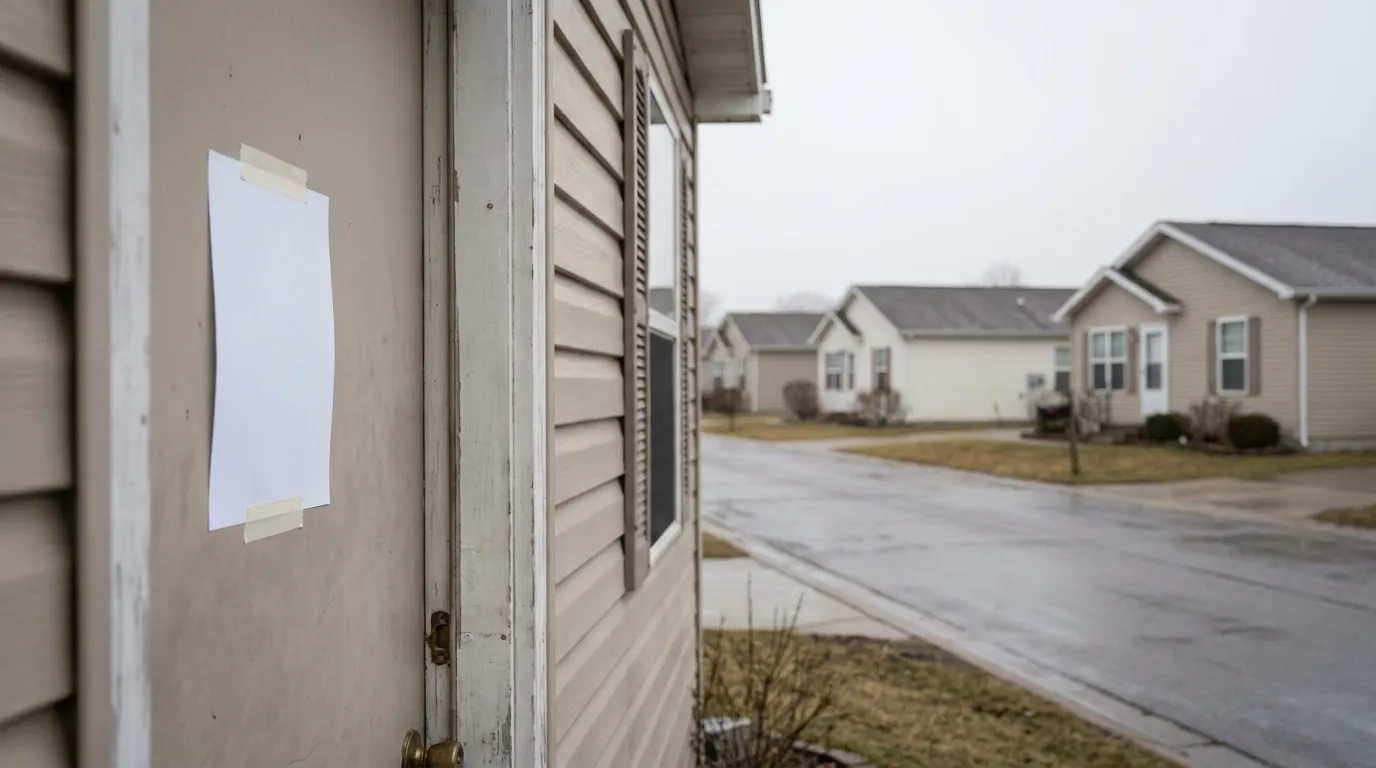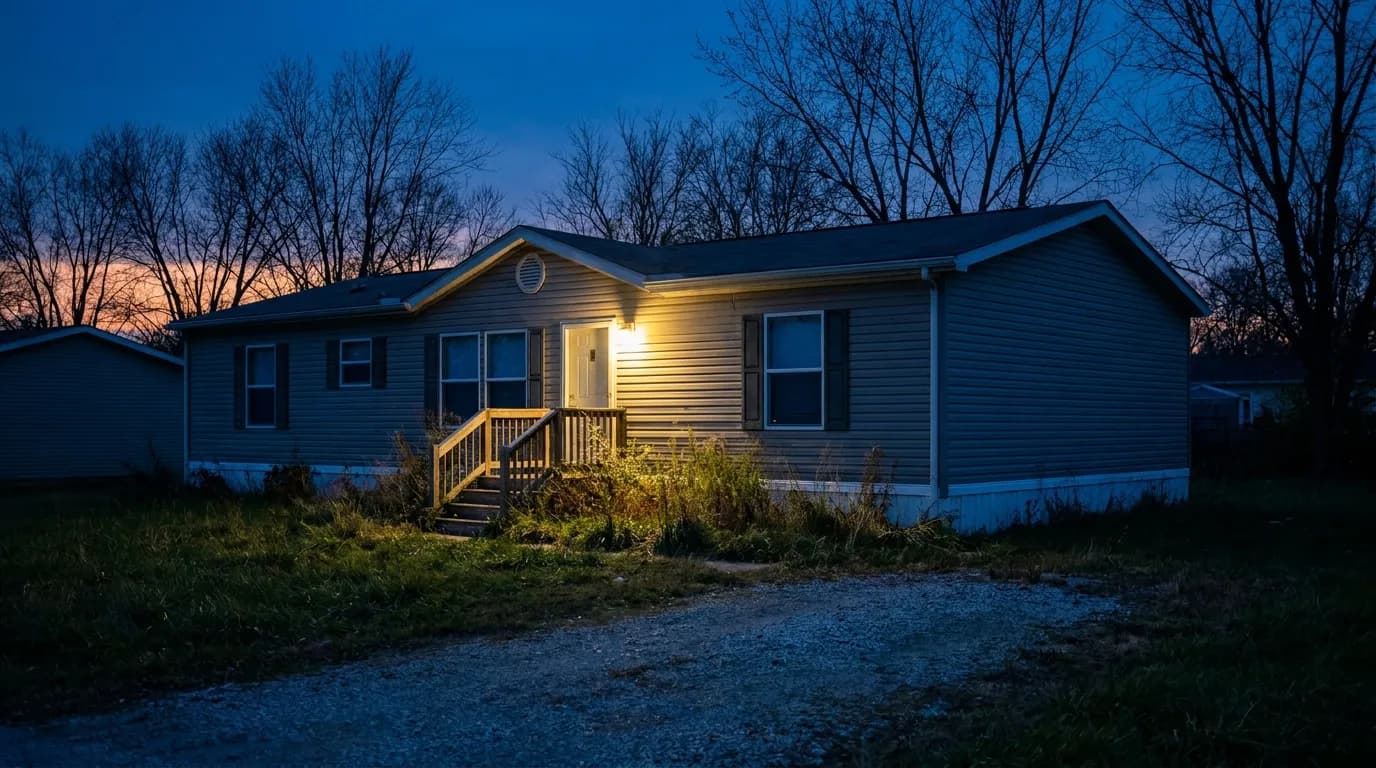
The hardest part of inheriting a manufactured home is not the grief, though that is real. It is that the clock starts immediately and nobody tells you.
Lot rent accrues from the first of the month whether anyone is living there or not. Utilities keep billing. Insurance may have lapsed at the moment of death without anyone realizing. Taxes come due. Meanwhile the one thing you need in order to act, legal authority to sign, is the thing that takes the longest to obtain.
Here is the order that actually works.
Week one: three phone calls
Before anything else, make these calls, because all three of them get worse with delay.
The community office, if the home is on a rented lot. Tell them what happened, in writing as well as by phone. Ask for a written account statement and ask what their policy is for a home whose owner has died. Many communities are reasonable about this if they hear from you early. Communities that hear nothing for three months start abandonment or lien processes, and those are much harder to unwind.
The insurance carrier. A policy in a deceased person's name on a now-vacant home may not be covering what you assume. Most homeowner policies treat vacancy differently. Ask directly whether coverage is currently in force, what happens on vacancy, and what you need to do. A frozen pipe or a break-in on an uninsured home can exceed the home's value.
Whoever has the keys and the mail. Stop the mail or forward it. Unopened mail at an empty home is both an invitation and where the notice you needed to see is sitting.
Step one: read the ownership document, exactly
Find the title, certificate, or statement of ownership and read the names character by character.
Sole ownership in the deceased person's name means authority has to come from an estate proceeding or a state-provided alternative.
Joint ownership with right of survivorship often means the surviving owner already owns it and can proceed, sometimes with just a death certificate. That is the shortest path in existence and worth checking before you assume otherwise.
Two names joined by "and" generally requires both signatures.
A trust as owner means the successor trustee acts, often without probate at all, which is another short path worth checking.
Note whether a lien shows on the record. A chattel loan does not disappear on death.
If you cannot find the document at all, request the title record from your state's titling authority. The agency's record tells you who the owner of record is, and that is the fact everything else depends on. What documents you need to sell a manufactured home covers how to find that agency in your state.
Step two: establish authority to sign
This is where state variation is at its widest, and it is why no article can give you a single answer.
Probate goes by different names, runs through different courts, has different dollar thresholds, and takes different amounts of time in every state. What is broadly true is that most states offer more than one path, and the shortest one is frequently overlooked.
Full probate with an appointed personal representative, who receives letters testamentary or letters of administration. The thorough path, and the slow one.
A small-estate or summary procedure. Many states allow an affidavit-based transfer when the total estate value is under a stated threshold, with no full court administration. A manufactured home's value sometimes falls under that threshold, particularly a chattel home on a rented lot. This is the single most useful thing an heir can learn.
A titling-agency process. Some states have a manufactured-home-specific heir or transfer-on-death procedure handled by the titling agency rather than a court.
Call the probate court clerk in the county where the person died. Clerks cannot give legal advice but they can tell you what procedures exist, what the thresholds are, and which forms the court uses. That call is free and it frequently saves months.
Step three: understand what is accruing while you wait
This is the part that changes the whole calculation, and it is why heirs often end up in a different place than they expected.
- Lot rent, every month, whether or not anyone lives there.
- Utilities, including minimums and reconnection fees if service is cut.
- Insurance, if you can place it on a vacant home, which is harder and costlier than insuring an occupied one.
- Property taxes, on the home and on land if the deceased owned it.
- Deterioration, which on a vacant manufactured home is not slow. Pipes freeze. Unnoticed roof leaks ruin floors. Humidity without conditioning produces mold. Vacant homes attract vandalism and copper theft.
- Community rules about vacancy, which sometimes include maintenance the estate is responsible for.
Run the monthly total and compare it to the home's likely value. For a modest chattel home on a rented lot, a lengthy probate can consume a meaningful share of the asset before anyone is allowed to sell it. That is what should drive your urgency about step two.
Step four: find the debts
Everything owed comes out of the proceeds, so find the list before you plan around a number.
- An unreleased chattel lien on the title, whether or not the loan was still being paid.
- Back lot rent and community fees. See back lot rent.
- Back property taxes on the home, and separately on the land.
- A mortgage or reverse mortgage on the land. Reverse mortgages typically become due on the borrower's death and run their own timeline.
- Utility balances.
- Claims against the estate, which in most states have a notice period and a claims window.
- Medicaid estate recovery, which exists in some form in every state and can attach to a decedent's assets. Ask an attorney if the person received long-term care benefits.
Step five: tax basis, which usually works in your favor
Generally, the basis of property acquired from a decedent is its fair market value at the date of death, or on an alternate valuation date if the executor elects one for estate tax purposes. IRS Publication 551 covers this.
Practically, that usually means if you sell near the date-of-death value, there is often little or no taxable gain, even if the deceased bought the home decades ago for a fraction of that. This surprises heirs who assume they face a large tax bill.
There are exceptions, and the rules interact with how the property was held, so confirm with a tax professional rather than acting on a general statement.
Step six: the contents, and closing from out of state
The contents are usually the emotional bottleneck. A full cleanout of a home several states away is a serious project, and heirs sometimes delay the entire sale for months because nobody can face it. Worth knowing: many cash buyers will take the home with the contents in place. Take out the specific items the family wants and leave the rest. That single decision can unstick an estate that has stalled.
Remote closings are common. You will typically need a notarized signature and occasionally a power of attorney on the titling agency's own form. Ask the agency what they accept before you have anything notarized, because some will not accept a general or out-of-state power of attorney.
One thing not to do
Do not sign a purchase agreement before you have authority to sell. It feels like progress and it is the opposite. You have created an obligation you cannot perform, started a closing clock you cannot meet, and given a buyer grounds to renegotiate when the date passes. Establish authority first, then take offers.
Be careful, too, about who you deal with while you are time-pressured. Inherited homes attract unsolicited contact. How to tell a real manufactured home buyer from a lead reseller is worth four minutes before you return any of those calls.
Why heirs often do choose a cash sale
Not because the price is higher. It usually is not. Because the holding cost is running, the coordination burden across several heirs in several states is real, and a listing requires someone to manage showings, repairs, and a community approval process from a distance.
When that is your situation, speed has genuine value and it is fair to weigh it. When it is not, the comparison in cash offer, owner financing, or listing may point you elsewhere.
The first useful question is usually just whose name is on the title.
*Probate procedure, small-estate thresholds, titling requirements, and estate recovery rules vary substantially from state to state. This article is general information and not legal or tax advice. Consult an attorney and a tax professional licensed in your state.*
Sources: IRS Publication 551, Basis of Assets; IRS, Gifts and Inheritances; HUD Manufactured Housing Homeowner Resources